
Digital Ocean Systems
Agent-Sea: Multi-Agent Systems for Coastal Operations
Marine environments present fast-changing, high-consequence operational challenges where generic software tools fail. The Agent-Sea framework organizes specialized autonomous agents designed to parse physical oceanographic sensors, interpret marine statutory regulations, and coordinate automated advisory alerts for mariners, aquaculture farm operators, and coastal research teams.
Tactical Multi-Agent Command Interface
Rather than relying on a single monolithic language model, Agent-Sea partitions maritime reasoning across specialized agents operating over shared environmental telemetry and knowledge stores.
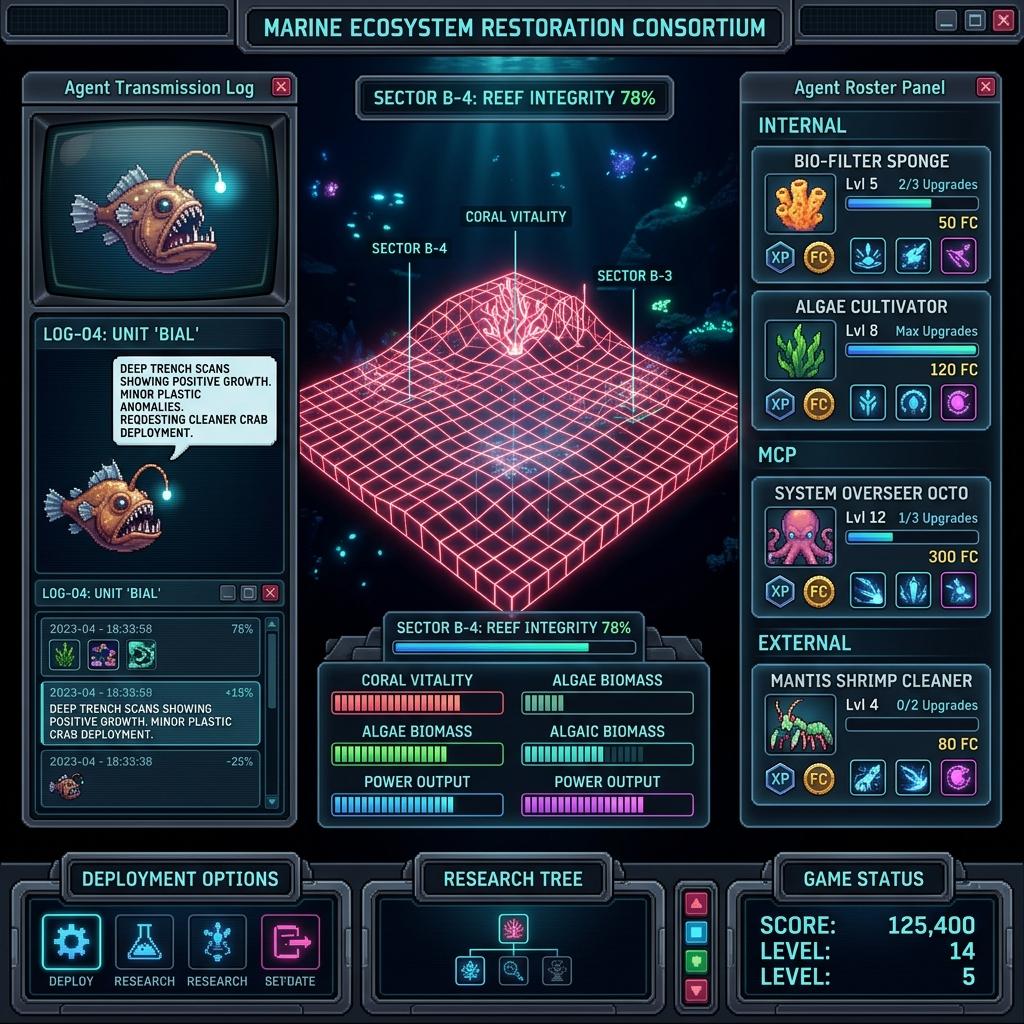
The 5 Oceanic Depth Divisions
The Agent-Sea collective is organized into 5 functional tiers modeled after oceanic depth zones. This structure enforces separation of concerns: high-level governance occurs at the surface, while compute-intensive and graph-analytical workloads operate in the abyss and trenches.
Surface Division (Epipelagic: 0 - 200m)
Mission command, public communications, statutory regulatory compliance, and time-series routing.
Mesopelagic Division (Twilight: 200 - 1000m)
Field operations, UI engineering, stress testing, and autonomous fleet dispatch.
Bathypelagic Division (Midnight: 1000 - 4000m)
Biogeochemical simulations, thermodynamic invariants, hydrodynamic modeling, and molecular kinetics.
Abyssopelagic Division (Abyssal: 4000 - 6000m)
Low-level autonomous software engineering, kernel optimization, AST refactoring, and hardware VRAM allocation.
Hadal Division (Trenches: > 6000m)
Deep graph science, long-term memory synapsing, model training, and continuous self-reflection.
Spotlight Agent Profiles
Each agent operates with bounded context, specialized toolsets, and strict role definitions:
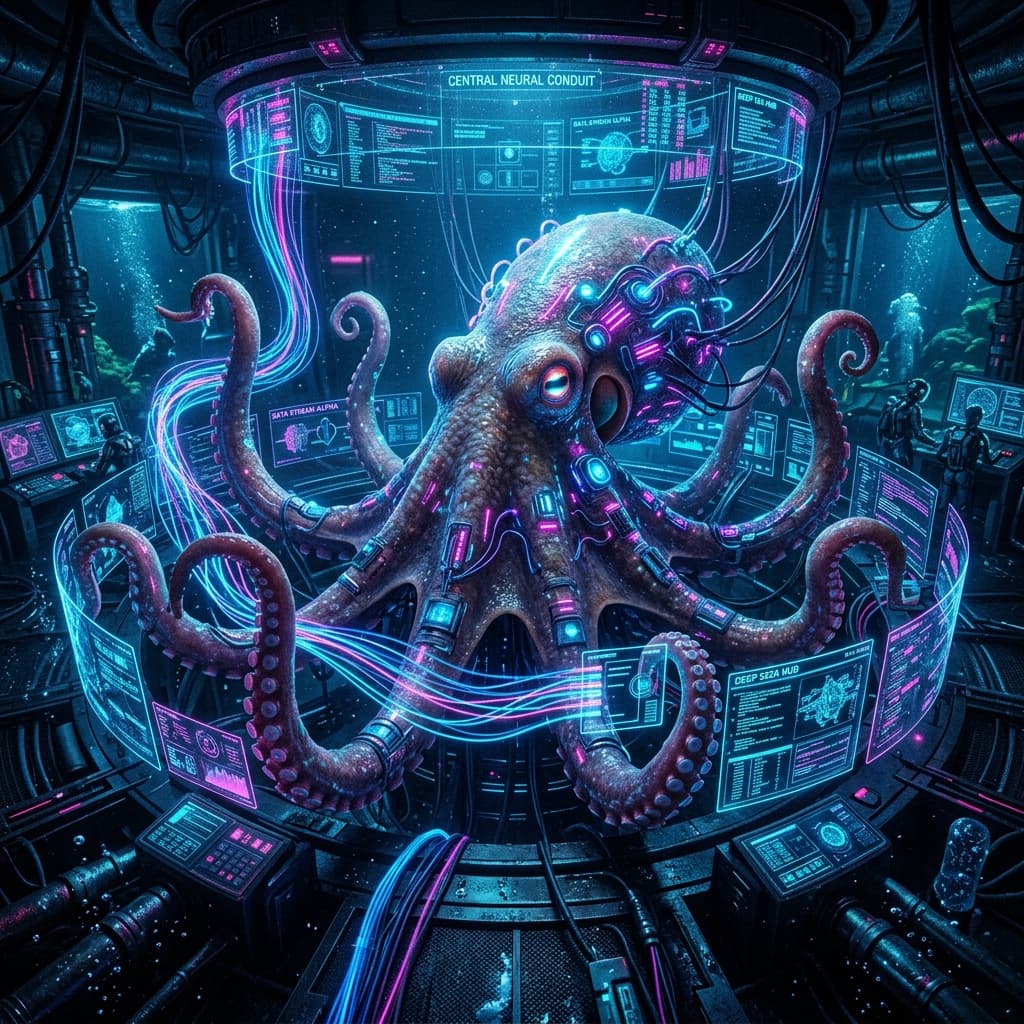
Cilo / Zephyr
Master Conductor (Surface Division)
Epipelagic (0 to 200m)
Schedules asynchronous tasks, routes high-priority alerts to farm managers, and coordinates specialized subagents across operational missions.
Ecco
Observatory Telemetry Ingestion
Bathypelagic (1000 to 4000m)
Ingests raw time-series data from Ocean Networks Canada and Hakai Institute buoys, filtering sensor drift and anomalous spikes in dissolved oxygen and salinity.
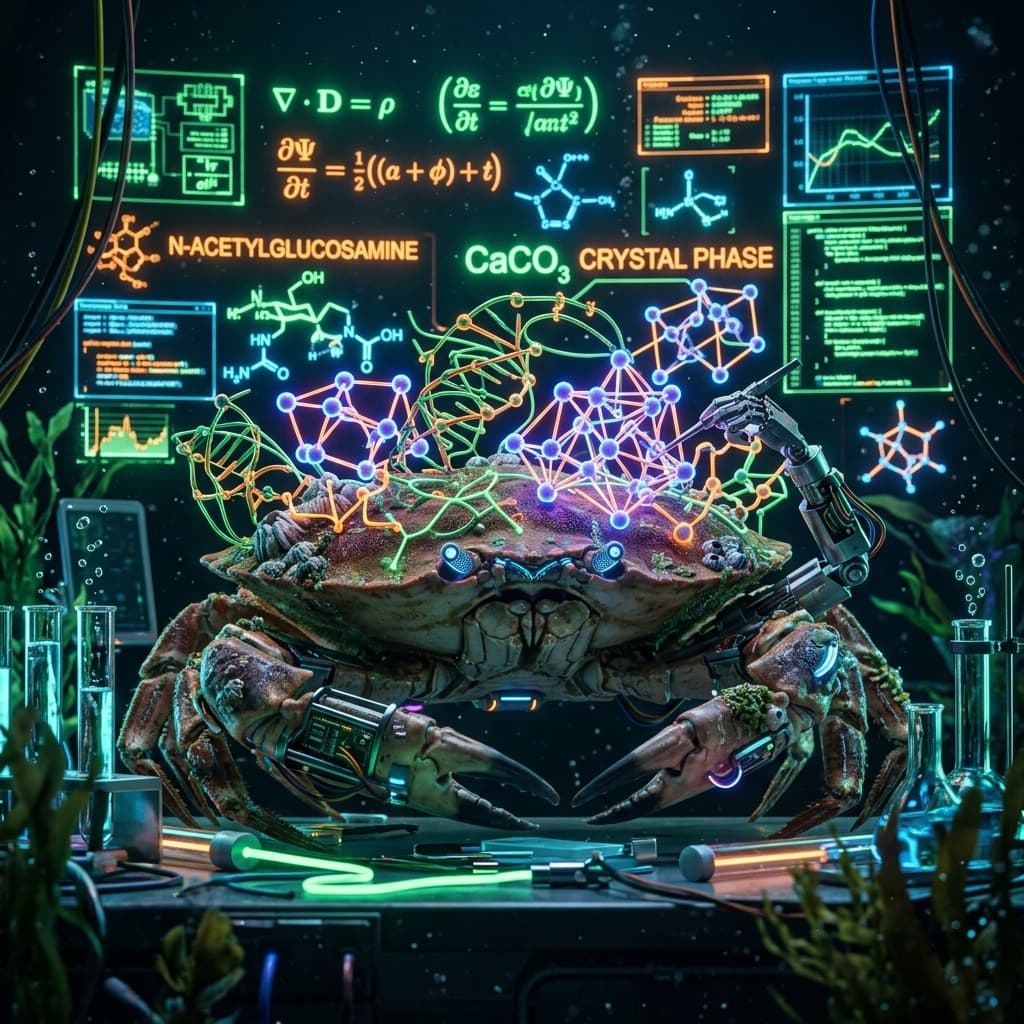
Decorator Crab (Deco)
Biomineral Chemist & Stoichiometry
Bathypelagic (1000 to 4000m)
Calculates precise biomineral mass requirements for sediment alkalinity buffering based on real-time porewater saturation states and TEOS-10 equations.
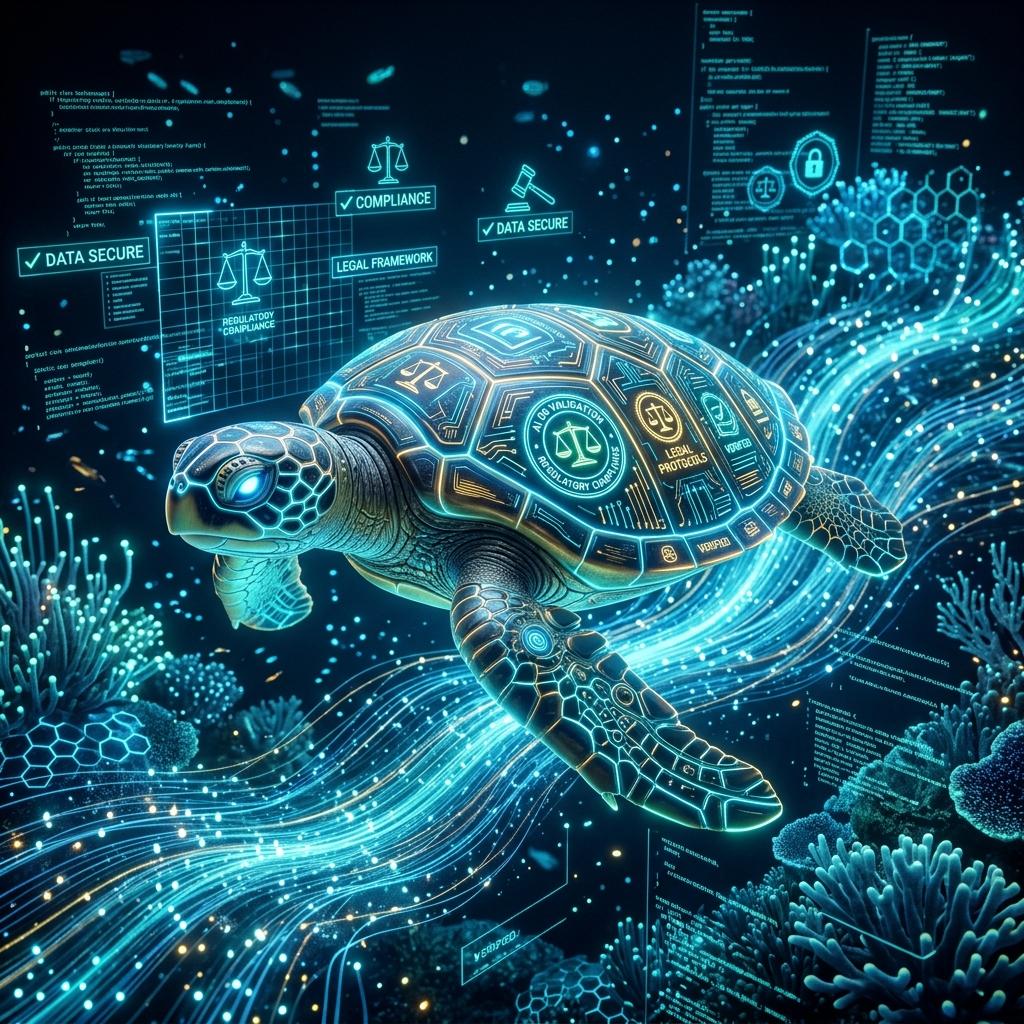
Sea Turtle (Aellis)
Statutory & Fisheries Compliance
Epipelagic (0 to 200m)
Cross-references proposed marine operations against Canadian Fisheries Act rules, SARA directives, and Canadian Shellfish Sanitation Program biosecurity guidelines.
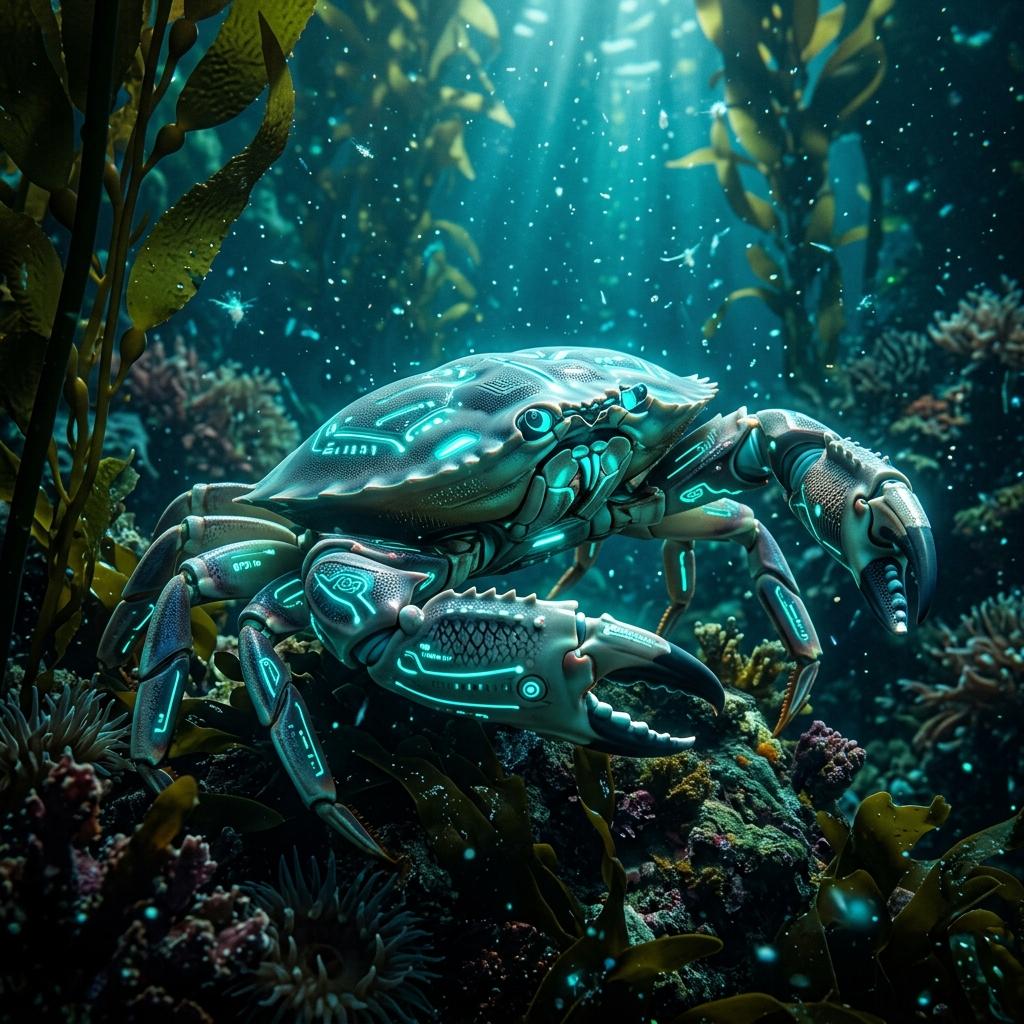
CoralClaw & CudaClaw
Kernel Optimization & Quantization
Abyssopelagic (4000 to 6000m)
Specialized in GPU memory profiling, AWQ INT4 GEMM acceleration, and vLLM paged-attention configuration for air-gapped vessel hardware.
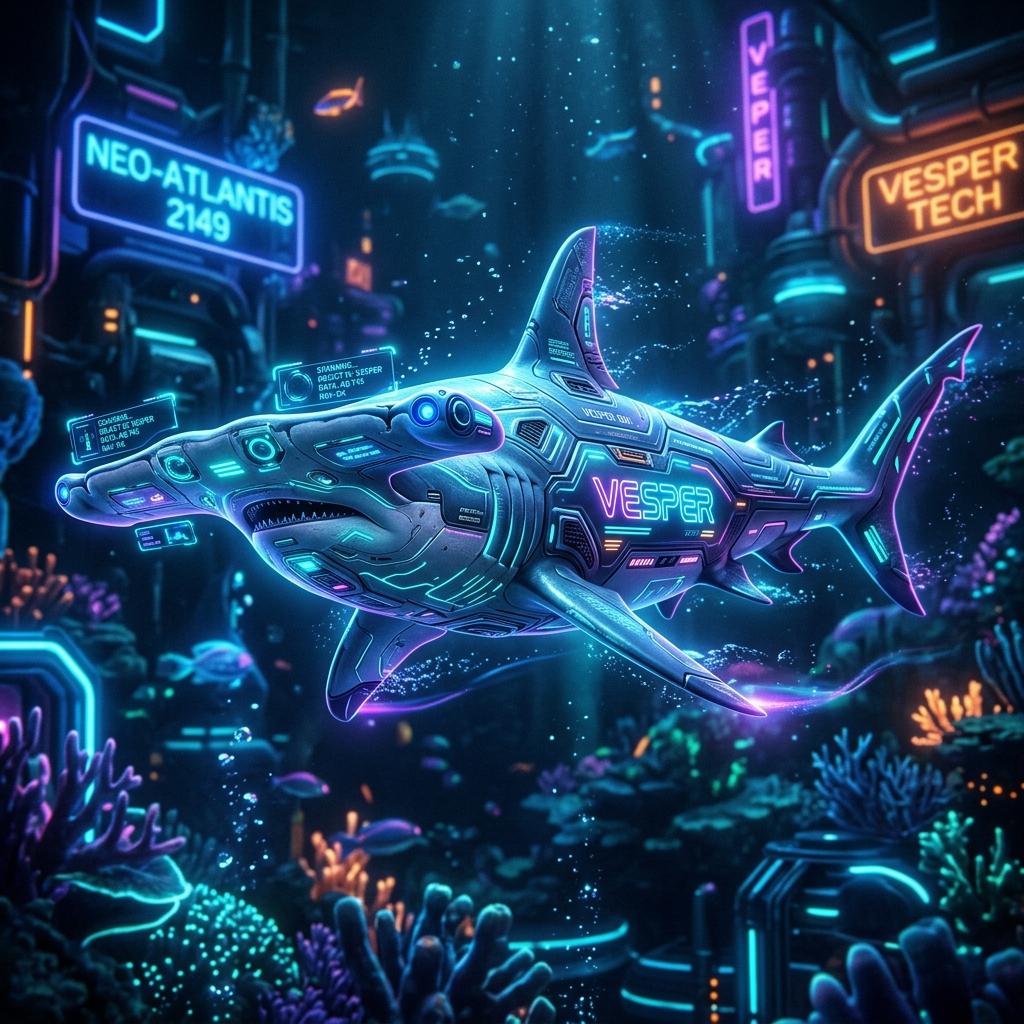
Vesper
Evaluation & Benchmarking
Mesopelagic (200 to 1000m)
Continuously runs validation sweeps against the AboveBoard 52 and AboveBoard-Marine-200 benchmarks and ARC-AGI reasoning puzzles during checkpoint evaluation.
The 6-Stage Helicinid Lifecycle
Every mission dispatched through Agent-Sea executes through a deterministic 6-stage lifecycle. Each stage aligns with an orthogonal coordinate axis in the 6-layer Hexactine spicule lattice, guaranteeing verifiable reasoning chains and automated compliance auditing:
Stage 1: Intake & Classification
+z ray (Fuses Constants)Ingests raw telemetry or operational queries, parses physical units, and locks physical constants (salinity, atmospheric pressure, seawater density) into immutable context variables.
Stage 2: Squad Formation
+x ray (Corroborates)Evaluates task complexity via the Atlantis Context Router and dynamically recruits specialized agents from the appropriate oceanic depth divisions.
Stage 3: Epistemic Gating
-x ray (Contradicts)Adversarial audit pass that detects hallucinations, verifies boundary conditions, and cross-checks proposed outputs against physical conservation laws.
Stage 4: Multi-Agent Execution
-y ray (Demotes)Parallel subagent execution in isolated memory contexts, executing code synthesis, bathymetric raster calculations, or regulatory comparisons.
Stage 5: Conflict Resolution
+y ray (Promotes)Synthesizes divergent agent outputs into unified recommendations, applying confidence-weighted voting and statutory compliance precedence.
Stage 6: Output Verification & Persistence
-z ray (Annotates Audit)Generates cryptographic audit logs, writes updated state to the Hexactine spicule lattice, and formats outputs for human operators or automated actuators.
Project Timeline & Development Milestones
The Agent-Sea project follows a phased roadmap from foundational knowledge harvesting to field deployment across the Salish Sea and Vancouver Island:
| Phase & Initiative | Timeline | Status | Key Deliverables & Outcomes |
|---|---|---|---|
| Phase 1: Knowledge Harvesting & Corpus Ingestion | September 2026 | Completed | Ingestion of 1,817 curated instruction-reasoning pairs (marine-science-sft-v1). Codification of Canadian Fisheries Act regulations, Hakai CTD buoy profiles, and TEOS-10 physical thermodynamic equations. |
| Phase 2: Architecture Selection & Tensor Merging | Late September 2026 | Completed | TIES weight fusion of Qwen2.5-32B (55%) and DeepSeek-R1-Distill-32B (45%) to establish Atlantis-Pyramid v2 (32B). Creation of Atlantis-Obelisk v2 (24B) for standalone edge telemetry. |
| Phase 3: Post-Merge DPO Preference Alignment | October 07, 2026 | Completed | Review of 75 golden Argilla human-in-the-loop pairs and 50 brevity/style alignment pairs. Implementation of dual-mode inference (Operational Mode for quick field triage; Deep Dive Mode for scientific proofs). |
| Phase 4: Quantization & Hardware Edge Profiling | Mid-October 2026 | Completed | AWQ INT4 GEMM compression reducing memory footprint to 18.24 GB VRAM on a single 24GB NVIDIA A10 GPU, reserving 5.76 GB headroom for vLLM paged attention KV caching. |
| Phase 5: Regulatory Benchmarking & Scientific Preprints | Early November 2026 | Completed / Live | AboveBoard 52 pilot verification (97.1% precision) and expansion to the 200-scenario AboveBoard-Marine-200 benchmark (91.5% score, 183 of 200 scenarios signed, 100% regulatory compliance). Zenodo publication of ARC Prize 2026 Paper Track (DOI: 10.5281/zenodo.14058921) and Gemma 4 PaperTrack technical report. |
| Phase 6: Autonomous Fleet & Mobile Foundry Deployment | Q1 - Q2 2027 | Planned | Integration of Agent-Sea conductor dispatch with Nemoclaw autonomous surface vessels and Shellforge 2x20 roll-on roll-off mobile biomineral units for real-time coastal restoration. |
Integration with Physical Infrastructure
Agent-Sea agents directly interface with physical restoration hardware, including Shellforge mobile biorefinery scheduling, hatcheries, and automated monitoring buoys deployed in active test bays.
Read our foundational paper on multi-agent intelligence in coastal threat mitigation →